
A practical look at turning Google Reviews and social chatter into a real-time fraud risk score – and pinpointing exactly where to investigate.
The Challenge
Fraudsters don't announce themselves. But they do leave traces – in Google Reviews, on Telegram, across TikTok and Facebook.
For banks and fintechs, the question isn't whether social media contains fraud signals. It's how to capture, analyze, and act on those signals before money is lost.
What We Built
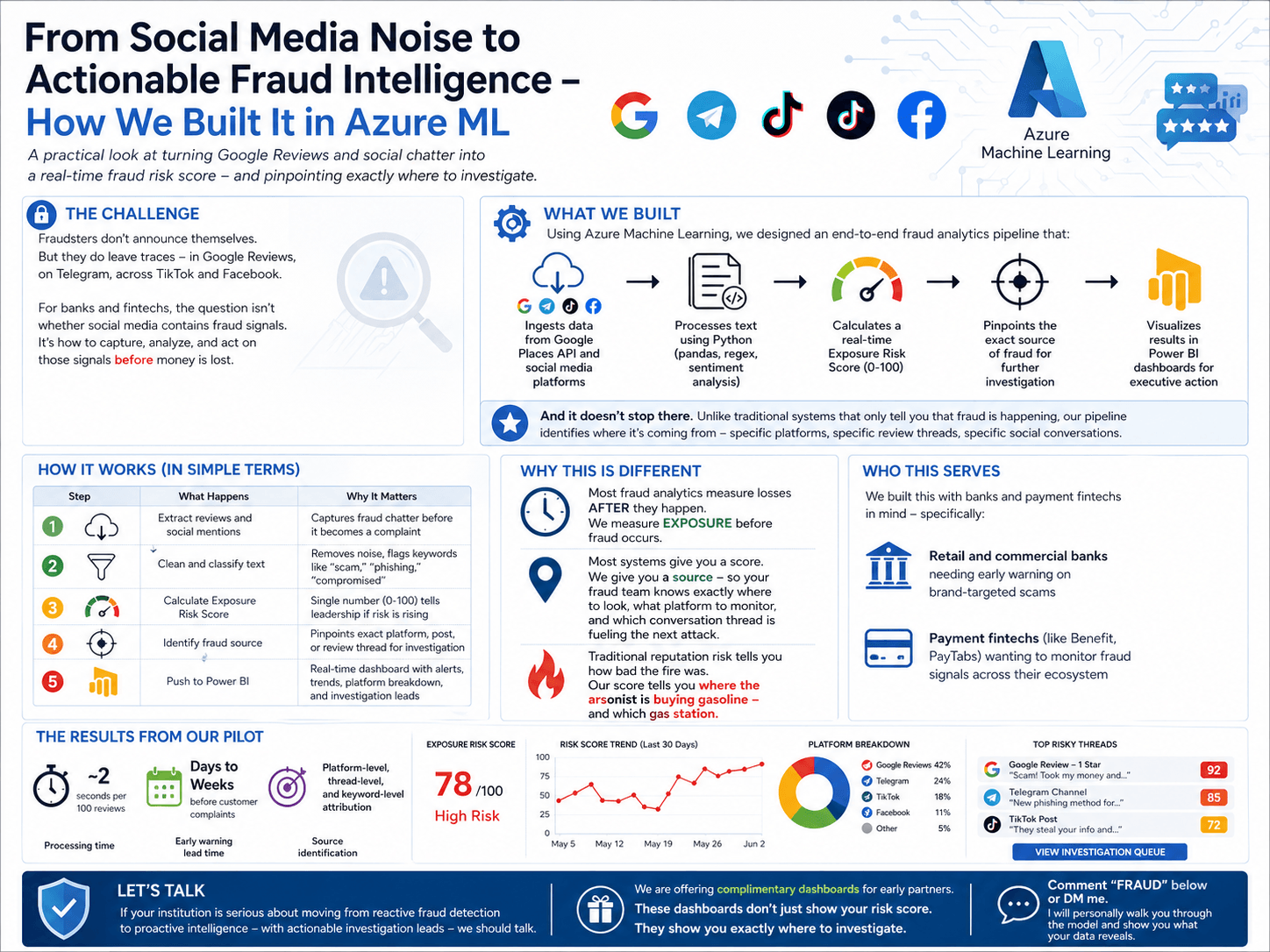
Using Azure Machine Learning, we designed an end-to-end fraud analytics pipeline that:
- Ingests data from Google Places API and social media platforms
- Processes text using Python (pandas, regex, sentiment analysis)
- Calculates a real-time Exposure Risk Score (0-100)
- Visualizes results in Power BI dashboards for executive action
- Pinpoints the exact source of fraud for further investigation
And it doesn't stop there.
Unlike traditional systems that only tell you that fraud is happening, our pipeline identifies where it's coming from – specific platforms, specific review threads, specific social conversations.
How It Works
- Extract– Pulls reviews and social mentions via APIs
- Clean & Classify– Removes noise, flags keywords like "scam," "phishing," "compromised"
- Calculate– Generates Exposure Risk Score (0-100) for leadership visibility
- Identify Source– Pinpoints exact platform, post, or review thread for investigation
- Visualize– Delivers real-time Power BI dashboard with alerts, trends, platform breakdown, and investigation leads
Why This Is Different
Most fraud analytics measure losses AFTER they happen. We measure EXPOSURE before fraud occurs.
Most systems give you a score. We give you a source– so your fraud team knows exactly where to look, what platform to monitor, and which conversation thread is fueling the next attack.
Traditional reputation risk tells you how bad the fire was. Our score tells you where the arsonist is buying gasoline – and which gas station.
Who This Serves
We built this with banks and payment fintechs in mind – specifically:
- Retail and commercial banks needing early warning on brand-targeted scams
- Payment fintechs (like Benefit, PayTabs) wanting to monitor fraud signals across their ecosystem
The Results From Our Pilot
- Processing time: ~2 seconds per 100 reviews
- Early warning lead time: days to weeks before customer complaints
- Source identification: platform-level, thread-level, and keyword-level attribution
- Single dashboard view: risk score, trend lines, platform heatmap, and investigation queue
Let's Talk
If your institution is serious about moving from reactive fraud detection to proactive intelligence – with actionable investigation leads – we should talk.
We are offering complimentary dashboards for early partners. These dashboards don't just show your risk score. They show you exactly where to investigate.
Comment "FRAUD" below or DM me. I will personally walk you through the model and show you what your data reveals.
Sohail Farooq: Building AI-driven fraud and reputation analytics for complex enterprises.